-
Landscape Genomics of Piedmont Herps
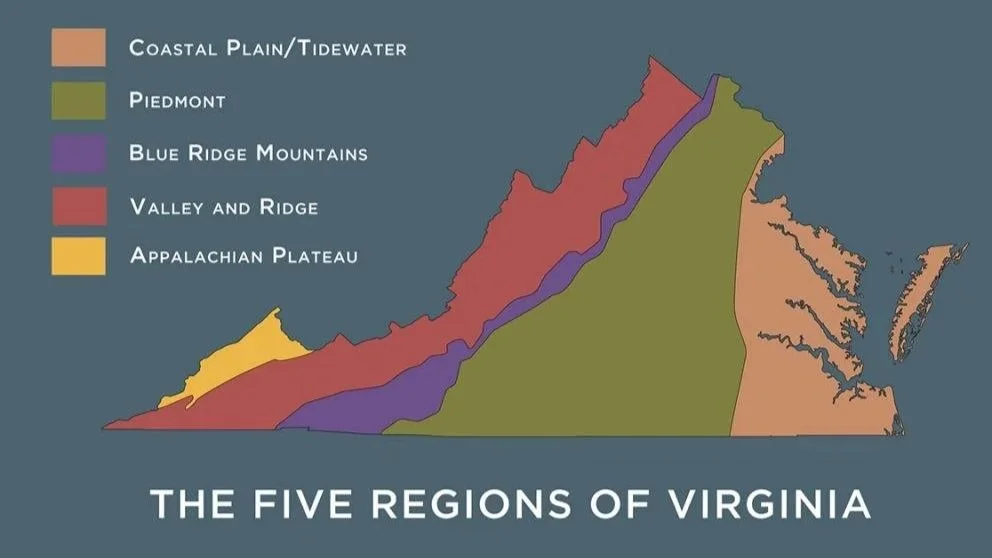
Virginia has one of the most diverse herpetofaunal assemblages in United States, with an equally complex geologic history bounded by five geologic and biogeographic zones: Appalachian Plateau, Valley and Ridge, Blue Ridge, Piedmont, and Coastal Plain. Using existing and newly collected herp specimens, the VMNH herpetology is trying to understand, at a finescal-resolution, the historical, recent, and human-caused landscape changes that affect population structure and gene flow in our herpetofauna. Photo above provided by the Virginia Museum of History and Culture.
-
New Guinean Snake Systematics and Evolution
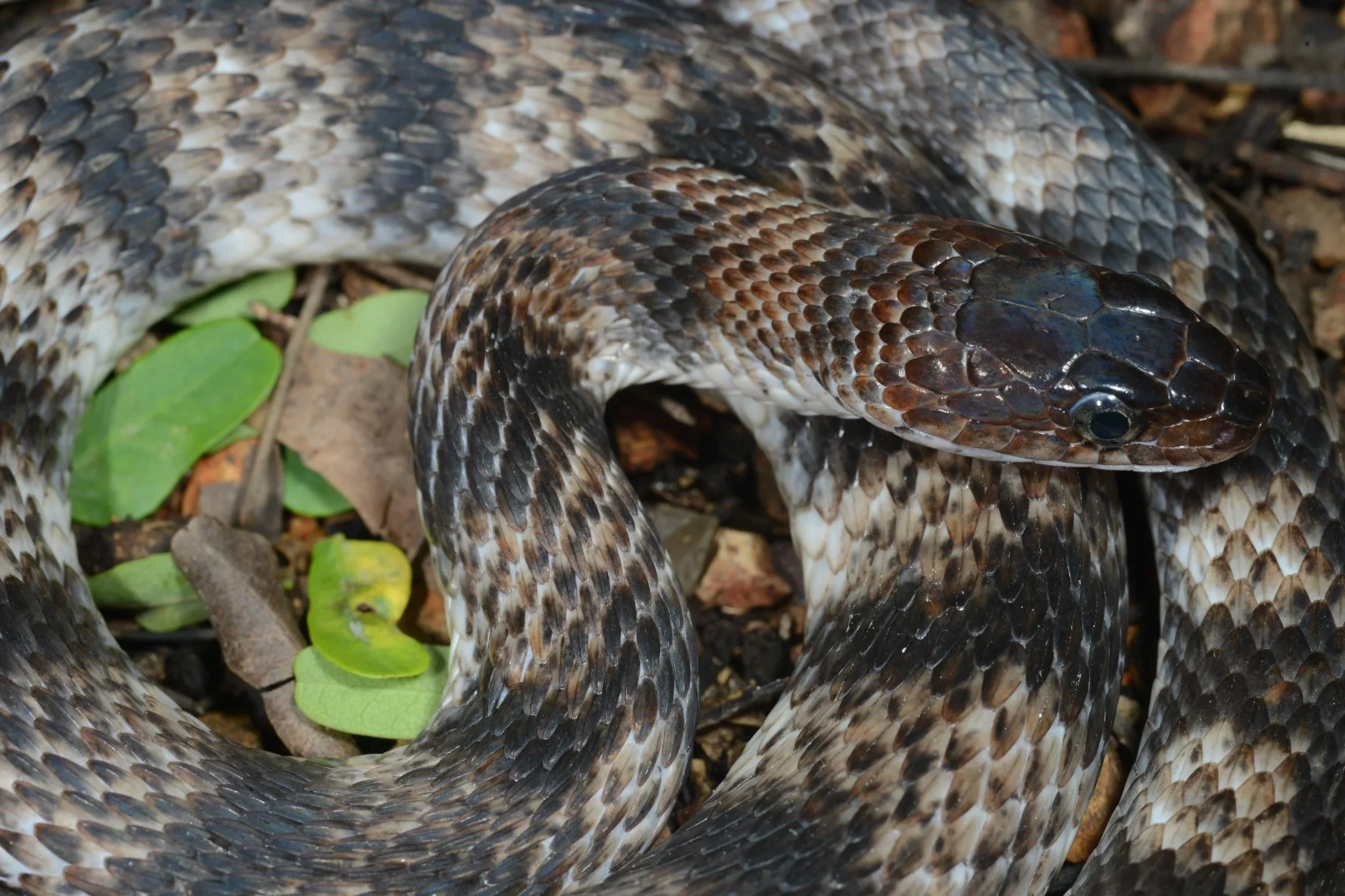
Continuing the research I began at LSU during my dissertation, I am using genomic and morphological data to elucidate the diversity of snakes on the island of New Guinea. The groups that I am currently focused on are the New Guinea Worm-Eating Snakes of Toxicocalamus, and the Sunda-Papuan Keelbacks of Tropidonophis (pictured above - Tropidonophis doriae from 2019 expedition).
-
Parasites of Herpetofauna
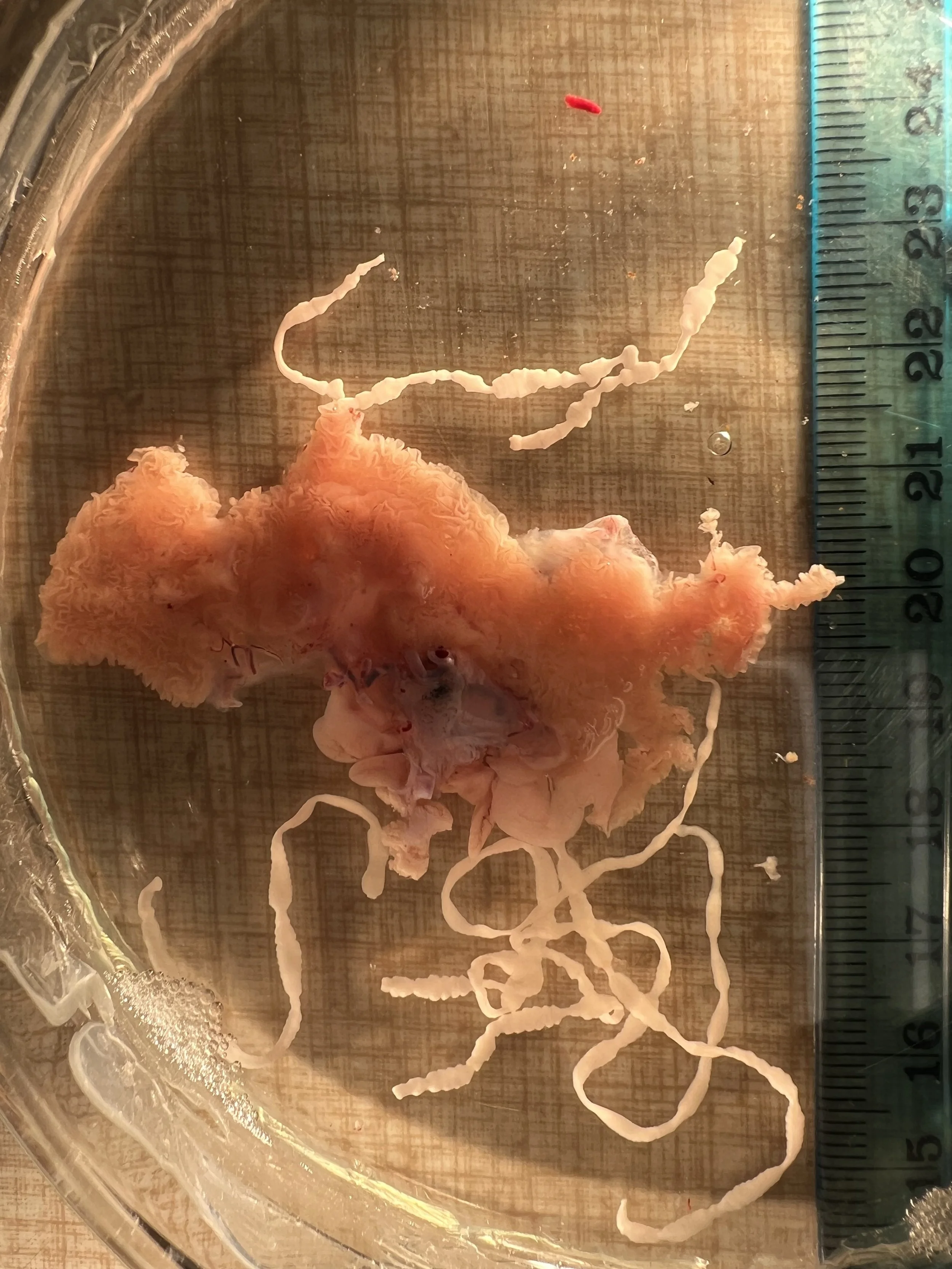
In addition to the systematics and evolutionary history of herps, I am also interested in pursuing these questions using the flatworm parasites infecting them. The majority of my work comprises the blood flukes that infect freshwater turtles (Schistosomatoidea). But recent work is expanding to other herp-infecting flatworms (tapeworms pictured above infecting a Prairie Rattlesnake).
-
KHASM: Kansas Herpetofaunal Atlas Structure Map
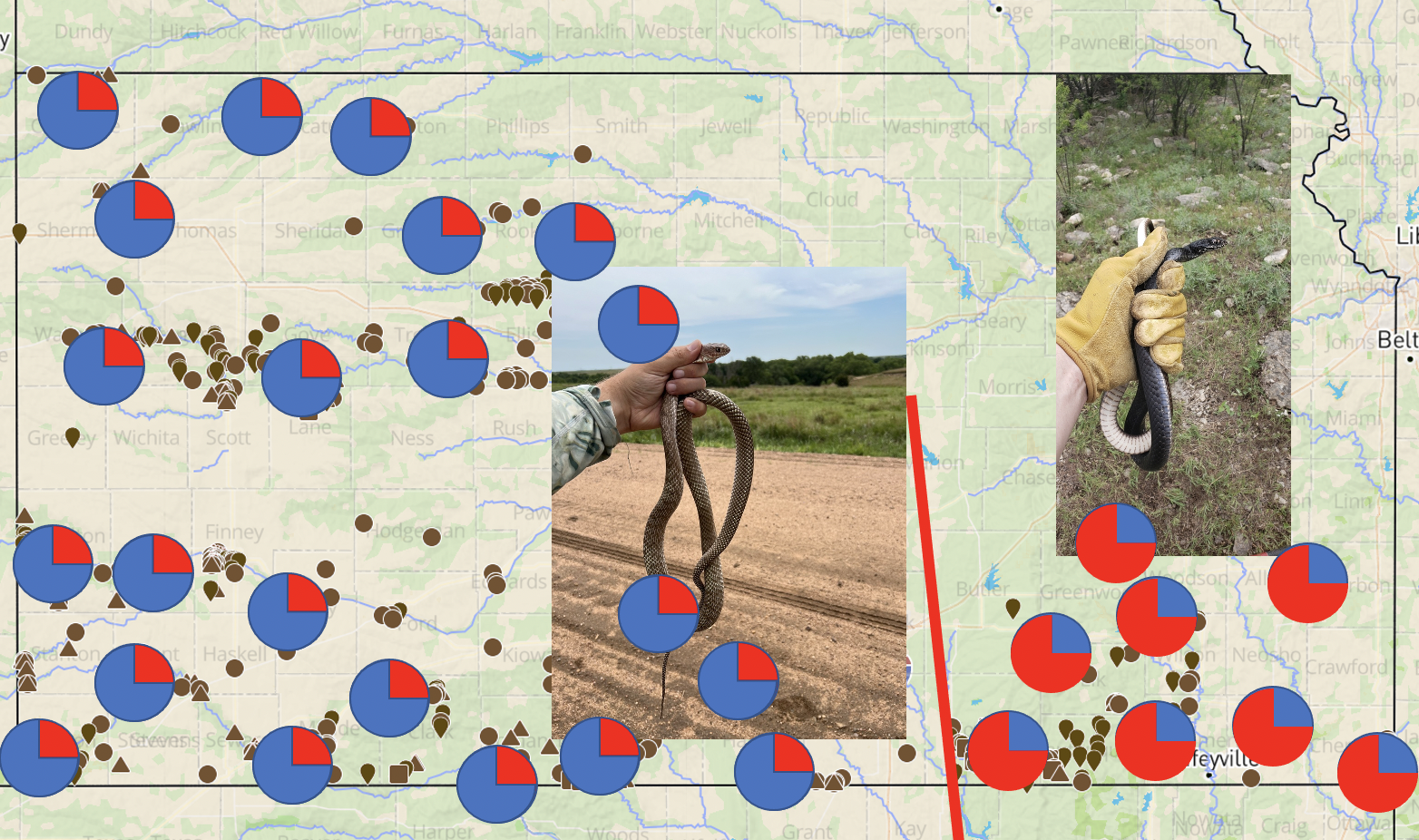
It can be argued that Kansas and its Board of Regents Universities were the foundation that began North American herpetology. Because of the rich herpetological history and herpetofaunal diversity in this state, the museums in the state of Kansas have allowed the development of invaluable tools for herpetologists of all backgrounds and levels, such as the Kansas Herpetofaunal Atlas (KHA). Using existing and ongoing collecting in the region, KHASM aims to integrate interactive genomic data to the current KHA, maximizing the evolutionary knowledge available at the public’s fingertips. KHASM is inspired by the amazing work ongoing by the California Conservation Genomics Project.